
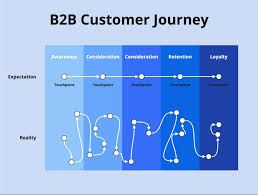
Explore How B2B Firms Use Customer Journey Mapping to Boost Retention
In the evolving landscape of B2B marketing, retaining customers has become just as important as acquiring them. While many organizations invest heavily in lead generation, long term success often depends on how effectively they understand and serve existing clients. This is where customer journey mapping plays a critical role. It helps businesses visualize how customers interact with their brand across different stages, allowing them to identify gaps, improve experiences, and build stronger relationships over time.
Customer journey mapping is not just a visual exercise. It is a strategic process that aligns internal teams, clarifies customer needs, and uncovers opportunities for improvement. For B2B firms, where decision cycles are longer and relationships are deeper, this approach becomes even more valuable.
Understanding Customer Journey Mapping in B2B
Customer journey mapping refers to the process of outlining every interaction a customer has with a business, from the first point of contact to long term engagement. Unlike B2C environments, where decisions may be quick and emotional, B2B journeys involve multiple stakeholders, detailed research, and structured evaluation.
Typically, a B2B journey includes stages such as awareness, consideration, decision, onboarding, and retention. Each stage contains multiple touchpoints, including website visits, content interactions, sales conversations, and support experiences.
By mapping these interactions, businesses gain a clearer understanding of customer expectations. As a result, they can design experiences that are more relevant, consistent, and valuable.
Why Retention Matters More in B2B
Customer retention in B2B is closely tied to revenue stability and long term growth. Since acquiring new clients often requires significant time and resources, retaining existing customers becomes more cost effective.
Moreover, loyal clients are more likely to expand their contracts, refer others, and provide valuable feedback. Therefore, improving retention is not just about reducing churn. It is about strengthening the overall business ecosystem.
Customer journey mapping supports retention by highlighting friction points. It allows businesses to see where customers might feel confused, unsupported, or disengaged.
Key Components of a B2B Customer Journey Map
To create an effective journey map, businesses must focus on several key elements:
Customer Personas
Understanding who the customer is forms the foundation of the entire journey mapping process. In B2B environments, personas often include decision makers, influencers, and end users, each with distinct roles and responsibilities in the buying process.
Each persona brings different goals, concerns, and expectations, which must be clearly understood. By developing detailed personas, businesses can create more targeted strategies, improve communication, and deliver experiences that feel relevant and personalized.
Touchpoints
Touchpoints represent every interaction between the customer and the business across different stages of the journey. These interactions can include emails, website visits, product demos, sales calls, onboarding sessions, and customer support conversations.
Mapping all touchpoints helps businesses understand how customers engage with their brand over time. It also highlights opportunities to improve communication, remove friction, and create a more seamless experience.
Customer Goals and Pain Points
At each stage of the journey, customers have specific goals they want to achieve. For instance, during the consideration stage, they may look for detailed comparisons, case studies, or proof of value before making a decision.
At the same time, customers may face challenges or pain points that affect their experience. Identifying these issues allows businesses to provide relevant solutions, reduce confusion, and improve overall satisfaction.
Emotions and Experience
Although B2B decisions are often based on logic and data, emotions still influence how customers perceive a brand. Frustration caused by poor communication or unclear processes can negatively impact trust and engagement.
A positive emotional experience, on the other hand, builds confidence and strengthens relationships. By understanding customer emotions, businesses can create more supportive and user friendly interactions.
Internal Processes
Mapping the customer journey also requires a clear understanding of internal workflows and operations. This includes how marketing, sales, and customer support teams interact and share information.
When internal processes are aligned, businesses can deliver a more consistent and reliable experience. This alignment reduces delays, improves communication, and ensures that customers receive the support they need at every stage.
How Journey Mapping Improves Retention
Identifying Friction Points
One of the most immediate benefits of journey mapping is the ability to identify areas where customers face challenges. For instance, a complicated onboarding process can discourage engagement early on.
Once these issues are identified, businesses can take corrective action. Simplifying processes, improving communication, and providing better support can significantly enhance customer satisfaction.
Enhancing Personalization
Journey mapping provides insights into customer behavior and preferences. As a result, businesses can tailor their interactions more effectively.
For example, if a company understands that clients often seek technical documentation during the onboarding phase, it can proactively provide these resources. This creates a smoother and more supportive experience.
Strengthening Communication
Clear and consistent communication is essential in B2B relationships. Journey mapping helps identify gaps where communication may be lacking.
By addressing these gaps, businesses can ensure that customers always know what to expect. This builds trust and reduces uncertainty.
Aligning Internal Teams
Retention often suffers when internal teams operate in silos. Journey mapping encourages collaboration across departments.
Marketing, sales, and customer support teams can work together to create a unified experience. This alignment ensures that customers receive consistent messaging and support at every stage.
Enabling Proactive Engagement
Instead of reacting to problems, journey mapping allows businesses to anticipate customer needs. For instance, if data shows that clients often struggle after the first month of using a product, businesses can introduce proactive check ins.
This approach not only prevents issues but also demonstrates a commitment to customer success.
Practical Steps to Build a Customer Journey Map
Step 1: Define Objectives
Before creating a journey map, businesses should clearly define their goals and expected outcomes. For retention focused strategies, this may include reducing churn, improving onboarding experiences, or increasing long term engagement.
Clear objectives provide direction and ensure that the mapping process stays focused. They also help teams measure success and align efforts toward meaningful improvements.
Step 2: Gather Data
Accurate data collection is essential for building a reliable journey map. Businesses can gather insights through surveys, customer interviews, analytics tools, and feedback channels to understand real customer experiences.
Using a mix of qualitative and quantitative data ensures a well rounded view. This helps uncover hidden pain points and provides a strong foundation for decision making.
Step 3: Map the Stages
Businesses should outline the key stages of the customer journey, such as awareness, consideration, decision, onboarding, and retention. Each stage should reflect actual customer behavior rather than assumptions.
Clearly defined stages make it easier to understand how customers move through the journey. This clarity helps identify where improvements are needed.
Step 4: Identify Touchpoints
At each stage, businesses should list all touchpoints where customers interact with the brand. These may include website visits, emails, sales calls, product usage, and support interactions.
Identifying touchpoints creates a complete picture of the customer experience. It allows businesses to evaluate how each interaction contributes to overall satisfaction.
Step 5: Analyze Gaps
Once the journey is mapped, businesses should evaluate it to identify gaps and areas for improvement. This involves analyzing customer behavior, feedback, and performance metrics.
Recognizing patterns helps uncover friction points that may impact retention. Addressing these gaps leads to a smoother and more effective customer experience.
Step 6: Implement Changes
Based on the insights gathered, businesses should take action to improve the journey. This may involve simplifying processes, enhancing communication, or improving support systems.
Implementing changes ensures that the journey map drives real value. It transforms insights into practical improvements that benefit both the business and the customer.
Step 7: Monitor and Refine
Customer journey mapping should be treated as an ongoing process rather than a one time task. Continuous monitoring helps track performance and identify new opportunities for improvement.
Regular refinement keeps the journey map aligned with changing customer needs and market conditions. This ensures long term effectiveness and sustained customer retention.
The Role of Data in Journey Mapping
Data plays a crucial role in making journey mapping actionable. Quantitative data such as website analytics and conversion rates provide measurable insights. At the same time, qualitative data from customer feedback offers deeper understanding.
Combining these data types allows businesses to make informed decisions. It also helps validate assumptions and refine strategies over time.
Common Challenges in Journey Mapping
Lack of Accurate Data
Without reliable and relevant data, customer journey maps may not accurately represent real experiences. This can result in strategies that are based on assumptions rather than actual customer behavior, leading to poor decision making.
In addition, inaccurate data can hide critical pain points and opportunities for improvement. Businesses must focus on collecting both qualitative and quantitative insights to ensure their journey maps reflect reality.
Overcomplication
Some businesses tend to create overly detailed and complex journey maps that are difficult to understand and implement. While depth is important, too much complexity can reduce usability and slow down decision making.
Keeping the map simple and clear makes it easier for teams to use it effectively. A focused approach ensures that the most important touchpoints and insights are highlighted for action.
Limited Cross Team Collaboration
Customer journey mapping requires strong collaboration across multiple teams, including marketing, sales, and customer support. Without proper coordination, the process may overlook critical insights from different stages of the customer experience, which can directly impact the effectiveness of retention strategies and overall planning.
Strong collaboration ensures a more complete and accurate understanding of the entire journey. When teams share insights and align their efforts, they also contribute to structured content planning, showing how B2B topic clusters are built through shared knowledge. This alignment helps deliver a consistent, seamless, and customer focused experience that strengthens long term relationships and improves retention outcomes.
Failure to Act on Insights
Creating a journey map is only the first step in the process. If businesses do not take action based on the insights gathered, the entire effort becomes ineffective and adds little value.
To achieve meaningful results, companies must translate insights into practical improvements. Taking action ensures that identified issues are resolved and customer experiences are continuously enhanced.
Real World Perspective
From a practical standpoint, many B2B firms initially underestimate the importance of journey mapping. However, once they begin analyzing customer interactions, patterns start to emerge.
For instance, a company may notice that clients frequently reach out for support after a product update. This insight can lead to proactive communication strategies, such as detailed update guides or training sessions.
Similarly, businesses often discover that small improvements, such as clearer onboarding instructions, can have a significant impact on retention.
These experiences highlight the importance of looking beyond surface level metrics. Understanding the full journey provides a more complete picture of customer needs.
Best Practices for Long Term Success
Keep the Customer at the Center
Every decision in a B2B strategy should begin with a clear understanding of customer needs, expectations, and challenges. When businesses focus on what truly matters to their clients, they create experiences that feel relevant and meaningful at every stage of the journey.
In addition, keeping the customer at the center helps build trust over time. It ensures that strategies are not driven only by internal goals but also by real customer value, which ultimately leads to stronger relationships and better retention.
Use Clear and Actionable Insights
Insights gathered from customer journey mapping should always lead to specific and practical actions. Instead of collecting data for analysis alone, businesses need to translate those findings into improvements that directly impact the customer experience.
Furthermore, clear insights reduce confusion within teams and help prioritize what matters most. When actions are measurable and well defined, it becomes easier to track progress and continuously refine strategies.
Continuously Update the Journey Map
Customer behavior, expectations, and market dynamics are constantly evolving. Therefore, a journey map should never be treated as a one time project but as an ongoing process that adapts to change.
Regular updates ensure that the journey map reflects real experiences and current trends. This allows businesses to stay aligned with customer needs and make timely improvements that keep their strategies effective.
Integrate Technology
Technology plays a crucial role in enhancing customer journey mapping efforts. Tools such as CRM systems and analytics platforms help businesses collect, organize, and analyze large amounts of customer data efficiently.
Moreover, integrating technology streamlines processes and improves decision making. It enables teams to gain deeper insights, automate tasks, and deliver more personalized and consistent customer experiences.
Focus on Consistency
Consistency across all touchpoints is essential for building trust and credibility in B2B relationships. When customers receive the same quality of experience across channels, it reinforces reliability and professionalism.
Additionally, consistent messaging and interactions reduce confusion and improve overall satisfaction. By aligning communication, branding, and service delivery, businesses can create a seamless experience that supports long term retention.
Measuring the Impact on Retention
To evaluate the effectiveness of journey mapping, businesses should track key metrics such as:
Customer retention rate
Customer lifetime value
Engagement levels
Support request frequency
Customer satisfaction scores
These metrics provide insights into how well the journey is supporting customer needs. Over time, improvements in these areas indicate successful retention strategies.
Conclusion
Customer journey mapping is a powerful tool for B2B firms seeking to improve retention. It provides a structured way to understand customer experiences, identify challenges, and implement meaningful improvements.
By focusing on real interactions and aligning internal teams, businesses can create more consistent and valuable experiences. This not only reduces churn but also strengthens long term relationships.
In a competitive B2B environment, where trust and reliability are essential, journey mapping offers a clear path toward sustainable growth. It encourages businesses to look beyond immediate transactions and invest in the overall customer experience.
Ultimately, retention is not achieved through isolated efforts. It is the result of continuous improvement, informed decision making, and a genuine commitment to customer success.
FAQs
What is customer journey mapping in B2B?
Customer journey mapping in B2B is the process of understanding and visualizing every interaction a business customer has with a company, from initial awareness to long term engagement. It helps identify gaps, improve experiences, and build stronger relationships that support retention.
Why is customer journey mapping important for retention?
It helps businesses identify friction points and improve customer experience at each stage. By understanding where customers face issues, companies can take proactive steps to solve problems, enhance satisfaction, and build trust, which ultimately leads to better retention.
How is B2B journey mapping different from B2C?
B2B journey mapping is more complex because it involves multiple stakeholders, longer decision cycles, and detailed evaluation. Unlike B2C, where decisions are quicker, B2B requires structured communication and consistent engagement across various touchpoints.
What are the main stages of a B2B customer journey?
The main stages include awareness, consideration, decision, onboarding, and retention. Each stage represents a different level of engagement, where customers gather information, evaluate options, make decisions, and continue their relationship with the business.
What data is needed to create an effective journey map?
An effective journey map requires both quantitative and qualitative data. Analytics, user behavior tracking, surveys, interviews, and customer feedback all help in understanding real experiences and identifying improvement opportunities.
How often should a customer journey map be updated?
Customer journey maps should be updated regularly based on changing customer behavior, feedback, and market trends. Continuous updates ensure the map remains relevant and helps businesses adapt their strategies effectively.
Can small B2B businesses use journey mapping effectively?
Yes, small B2B businesses can use journey mapping to better understand customer needs and improve interactions. Even simple maps can highlight key issues and help create more personalized and effective customer experiences.
What are common mistakes in journey mapping?
Common mistakes include relying on assumptions instead of real data, creating overly complex maps, ignoring customer feedback, and failing to take action based on insights. These issues can reduce the effectiveness of the mapping process.
How does journey mapping support team alignment?
Journey mapping creates a shared understanding of the customer experience across teams. It helps marketing, sales, and support departments align their efforts, ensuring consistent communication and better collaboration.
What tools can be used for customer journey mapping?
Various tools such as CRM systems, analytics platforms, and visualization tools can be used for journey mapping. These tools help collect data, track interactions, and create clear visual maps that guide decision making.